Новини
MHP-Gromadi Charitable Foundation team presents bandura to Kharkiv Kobza Workshop
08 december 2023
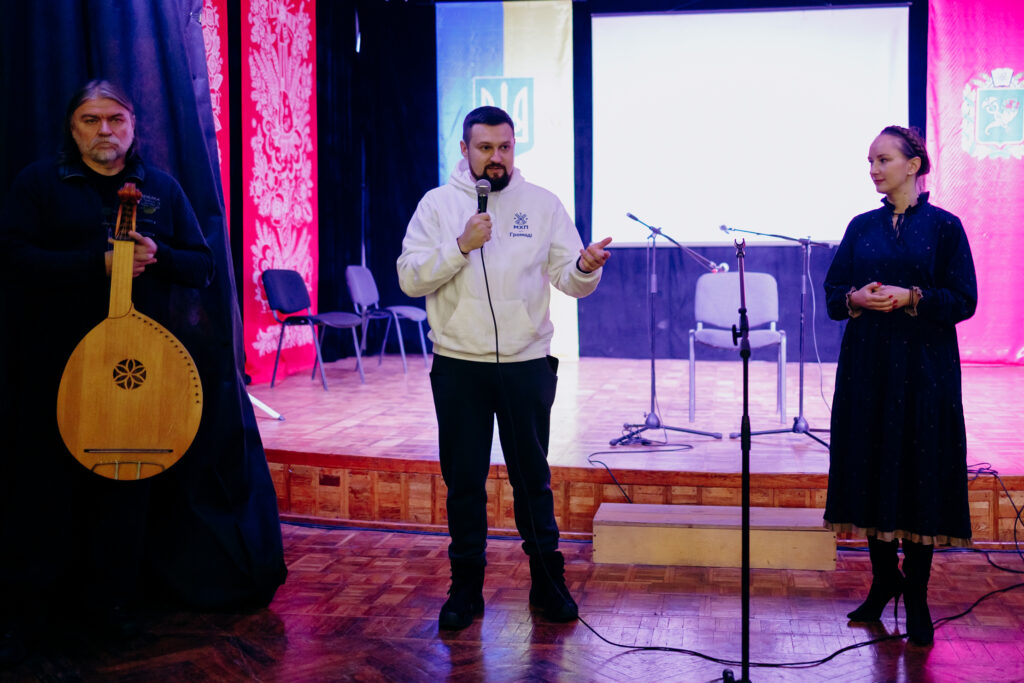
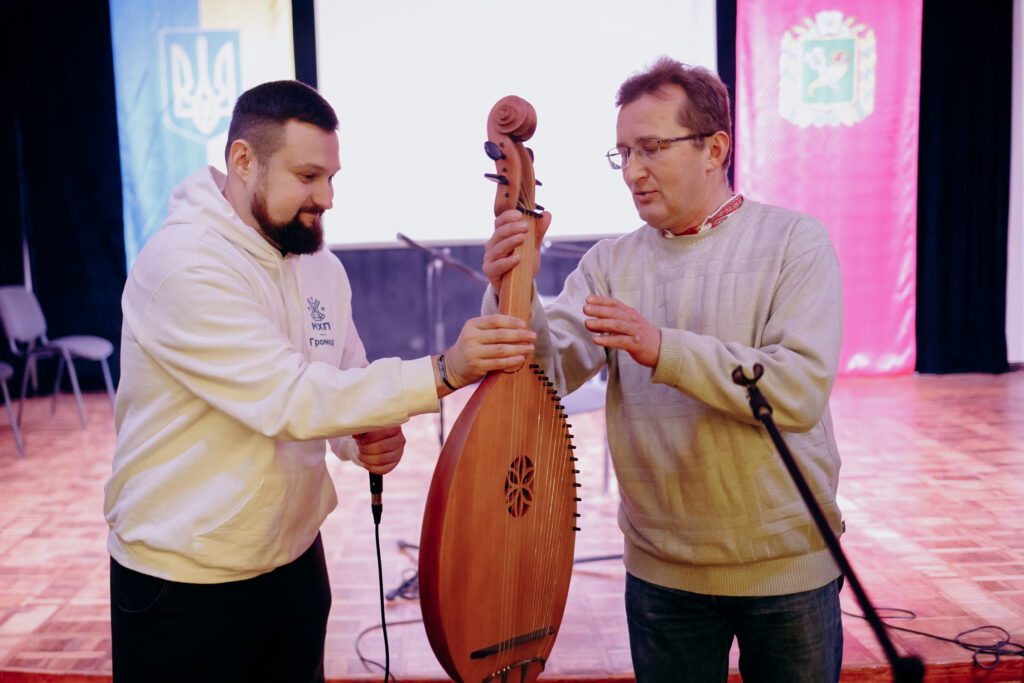
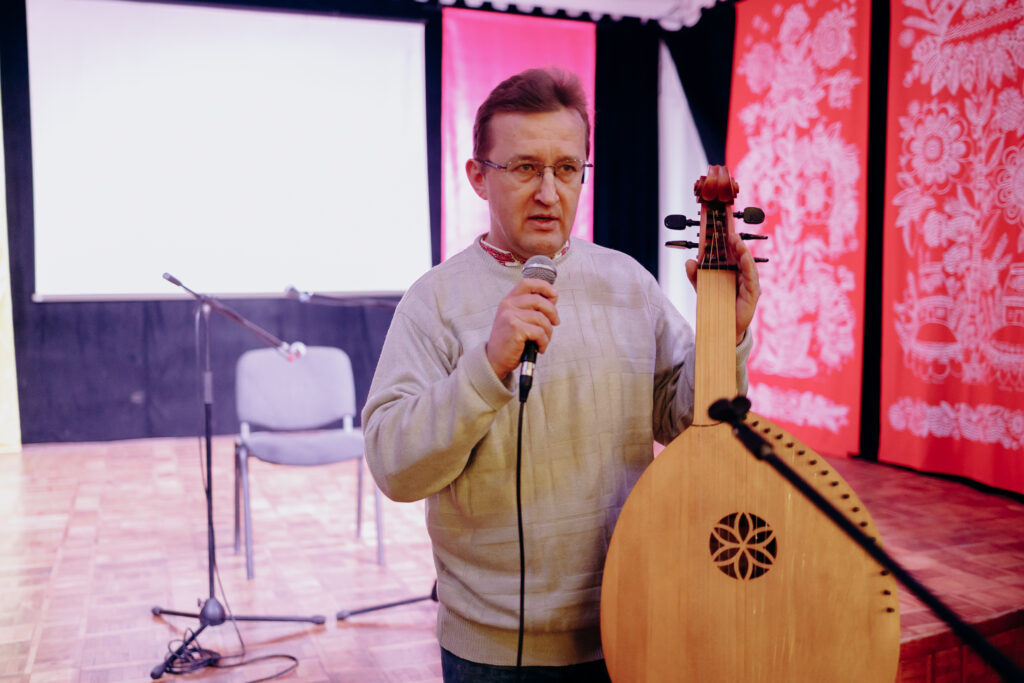
In early December, the Kharkiv Kobza Workshop received a new bandura from the MHP-Gromadi Charitable Foundation. The instrument will be used to teach all children eager to discover and continue to reinterpret the Ukrainian kobza and wheel lyre tradition.
The gift was presented during a charity kobza concert organised to commemorate the 220th anniversary of the birth of Ostap Veresay, a prominent Ukrainian kobza player. Kharkiv (after Kyiv and Lviv) became the third city where the Foundation supported kobza workshops by providing them with musical instruments. The bandura was handed over to the Kharkiv workshop by Pavlo Moroz, Director of the Corporate Social Responsibility Department at MHP, a strategic partner of the MHP-Gromadi Foundation in the implementation of important cultural projects.
“We have come to Kharkiv to express our gratitude to those people who have persistently upheld Ukrainian customs, values, and the unwavering determination of the Ukrainian nation throughout history, particularly in today’s challenging circumstances. We must support the cultural identity of each one of us. Kobzarism plays a special role in the preservation of Ukrainian meanings. After all, despite the physical destruction of kobzars, reprisals, and bans on their music, the kobzar word not only has endured but also acquired a new significance in contemporary times,” shared his thoughts Pavlo Moroz, Director of MHP’s Corporate Social Responsibility Department.
The tradition of Ukrainian kobzarism goes back more than 300 years. Its distinctiveness lies in the oral transmission of information, handmade musical instruments, and the history and meanings conveyed by wheel lyre players, bandura players, and kobzars themselves. Today, kobzarism is focused on preserving statehood, among other things.
First and foremost, kobzarism must fulfil the function it has consistently performed. It should serve as a signpost showing direction to certain traditions and things that preserve our nation, culture, and identity. This is particularly important in a time when they are intent on eradicating our culture,” added Kost Cheremskyi, a foreman at the Kharkiv Kobzar Workshop.
For the MHP-Gromadi Charitable Foundation, it is a great honour to support the preservation of this tradition, as it treats cultural identity as one of its fundamental missions. This is why the team, in addition to distributing musical instruments to kobza workshops, endorsed the initiative of Oles Sanin, a film director, wheel lyre player, and Vice President of the National Academy of Arts of Ukraine, to include “safeguarding practice of kobza and wheel lyre tradition” in the UNESCO Intangible Cultural Heritage. This initiative encompassed the creation of a documentary film about the kobza and wheel lyre and included the submission of the relevant application on behalf of Ukraine. While the application is pending consideration by the UNESCO jury, kobza workshops in Kyiv, Lviv and Kharkiv, with the support of the MHP-Gromadi Charitable Foundation, continue to hold concerts and educational events in Europe and Ukraine to promote the cultural heritage of kobzarism.
“Kharkiv has turned into a fortress and no big events or concerts are held there. Theatres and even universities are currently closed. According to various sources, more than half of the residents fled the city. But we see it as a story of resistance. Moreover, the very history of kobzars, bratchyks (fellows), and the kobza workshop has always been a demonstration of the idea that a people, a fortress, or a state can be destroyed, but it is impossible to destroy a culture or kill a song,” stressed Oles Sanin, a film director.
Bandura and kobza are musical instruments that are associated with Ukraine, its life, history, art, and the creativity of its people. Kobzars and wheel lyre players are rooted deep in the country’s past. Kobzar songs inspire and comfort, recreate history and give hope.
“We try to preserve these things so that they would not be reduced to a mere museum or a theatre. We want to be bandura players and continue to perpetuate our tradition,” summed up Mykola Tovkailo, a foreman at the Kyiv Kobzar Workshop.