Новини
An Idea That Can Become a Business: Agrokebety Competition 2026 Is Now Open
24 march 2026
The competition brings together education, science, and business, aiming to identify promising ideas for the agricultural sector and support their further development in collaboration with industry partners. The total prize fund amounts to UAH 500,000, to be awarded to three winning teams.
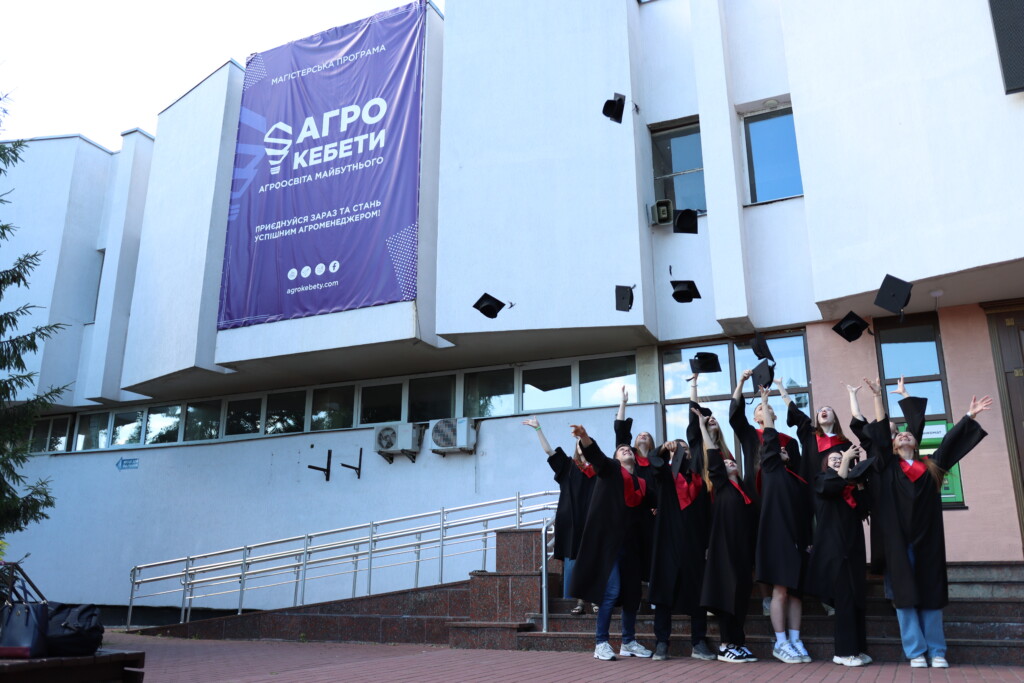
One of the key participation requirements is teamwork. Participants form groups of up to five people and develop their projects collaboratively, working in a format that closely mirrors real business processes.
This approach enables participants to:
— distribute roles (analytics, strategy, finance, presentation)
— replicate the workflow of agri-startups
— strengthen teamwork and collaboration skills
The competition simulates work on a real business case, where both the idea and the ability to implement it are equally important.
“I am truly proud that the Agrokebety Competition has become a strong tradition for us. In times of significant challenges for Ukraine, initiatives like this are more relevant than ever. Supporting talented young people and fostering innovative solutions for the agricultural sector is not just an investment in education — it is a strategic step toward strengthening the country’s food security.
Each year, the competition brings together the most active students from the Agrokebety project as well as representatives of leading universities across Ukraine. This proves that Ukrainian students are ready to take responsibility, generate bold ideas, and contribute to the development of a modern, technology-driven agricultural sector. I am confident that this year’s participants will impress us with their creativity and professional approach, and that their projects will make a meaningful contribution to the future of Ukrainian agriculture,”
said Anatolii Tsyrkun, Head of the Agrokebety project.
This year’s key focus is ESG, sustainable development, and innovation in agriculture. Participants are expected to develop not only profitable solutions but also those aligned with current industry challenges and global trends.
“The future of the agricultural sector lies with a new generation of professionals who combine entrepreneurial thinking with practical experience. Our goal is to give them the opportunity to work on real projects today, test their ideas, and see the economic impact of their efforts.
We contribute to shaping a more efficient, responsible, and sustainability-oriented agricultural business. These are the people who will drive long-term growth in the sector and the national economy,”
noted Oleksandr Pakholiuk, Director of the “MHP–Hromadi” Charitable Foundation.
Another important component of the competition is the integration of academic and practical expertise. Participants:
— work with academic supervisors to ensure depth, analytical rigor, and solid justification
— receive feedback from the Expert Board to adapt their ideas to market realities
This format allows participants to develop not just theoretical concepts, but viable solutions with the potential for real-world implementation after the competition, including within the framework of state universities.