Новини
Community Development Success Index: Ukraine Introduces a New Formula for Community Success
09 january 2026
The presentation of the first analytical tool took place, enabling a comprehensive assessment of territorial community development by combining statistical data with the needs and aspirations of residents. This tool — the Community Development Success Index — offers an approach that looks beyond formal indicators to reveal how governance decisions impact the everyday lives of people.

The project was developed by the MHP-Hromadi Charitable Foundation in partnership with ISAR Ednannia, with the support of the European Union and the research center Info Sapiens. It is designed to transform the philosophy of local governance — shifting from intuition-based decisions to an evidence-driven approach grounded in comprehensive data on the economy, safety, and quality of life in communities.
“We aimed to turn dry reporting into a living dialogue. It is important to understand that success is not only about numbers in reports, but about whether people’s lives improve with every decision made by a community leader. This Index makes it possible to measure what once seemed intangible — the real sense of well-being and direct feedback from residents,”
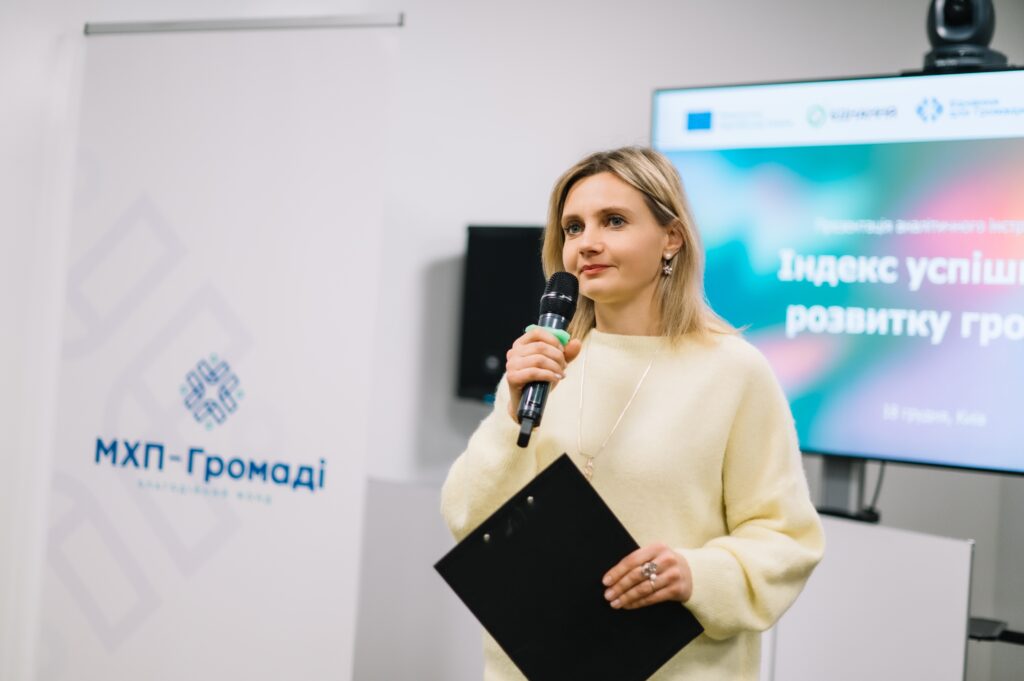
The presentation brought together representatives of national authorities and local self-government, the expert community, civil society organizations, and international partners. The discussion focused on the practical application of the tool and its role in shaping strategic decisions for territorial development.
“This is a foundation for evidence-based governance at the local level. We provide communities with a clear system of coordinates, where every strategic step is supported by verified data and the real needs of people. This enables communities to strengthen their capacity in a targeted way, using data to implement economic, social, and cultural projects,”
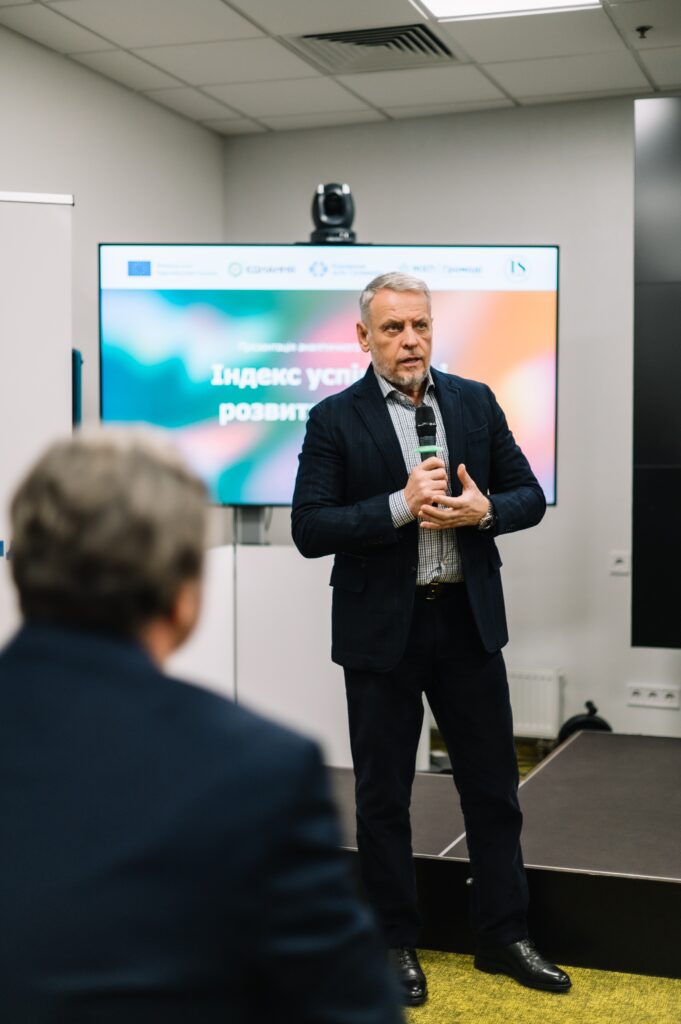
This approach makes it possible to understand how the efficiency of budget spending truly correlates with the living conditions of the population.
“Since the launch of Ukraine’s decentralization reform, a portion of decision-making authority and financial resources has been transferred to the local level. In wartime, up to 60% of community budgets are directed toward social needs, including support for those affected by the war and housing recovery. At the same time, territorial development is impossible without socially responsible business that creates jobs, attracts investment, and supports entrepreneurship, education, and healthcare,”
The practical value of the tool has already been confirmed through pilot studies conducted in the Kaniv, Myronivka, Liubeshiv, and Trostianets communities. The results demonstrated that sustainable development is impossible without resident engagement and their active participation in shaping local priorities.

“For us, this tool is a way to demonstrate that cohesive communities with active civic participation are more resilient, navigate crises more effectively, and have greater potential for recovery and long-term growth. I would also like to extend special thanks to our partners — the MHP-Hromadi Charitable Foundation and the Info Sapiens research center — for their genuine partnership. By combining our expertise, we were able to create a tool that is both methodologically robust and practically valuable for communities,”
Today, territorial development in Ukraine is entering a stage where analytics become a driver of qualitative change. The Community Development Success Index has proven that when objective indicators align with residents’ perceptions, communities gain not just a ranking, but a real opportunity for sustainable and predictable future growth.