Новини
Lviv Region on the Path to Accessibility: Six Communities Receive a DEI-Based Roadmap to Make Public Spaces Inclusive for All
09 january 2026
Six territorial communities in the Lviv region have completed a large-scale audit of architectural accessibility at key social and municipal facilities. This step marks part of a comprehensive initiative aimed at driving systemic change and creating a truly barrier-free environment for all residents.
The accessibility assessments were conducted within the framework of the project “Development of Diversity, Equity, and Inclusion (DEI) Policies in Small Communities of the Lviv Region.” The project is implemented by the MHP-Hromadi Charitable Foundation as part of the “Unity for Community” initiative, carried out by ISAR Ednannia with the financial support of the European Union.
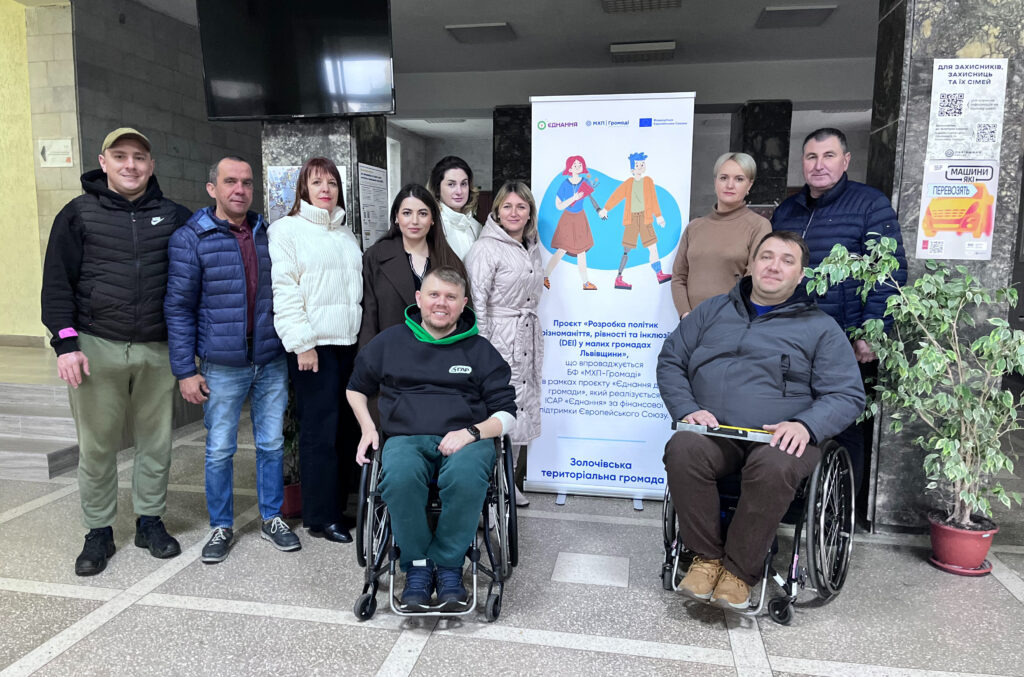
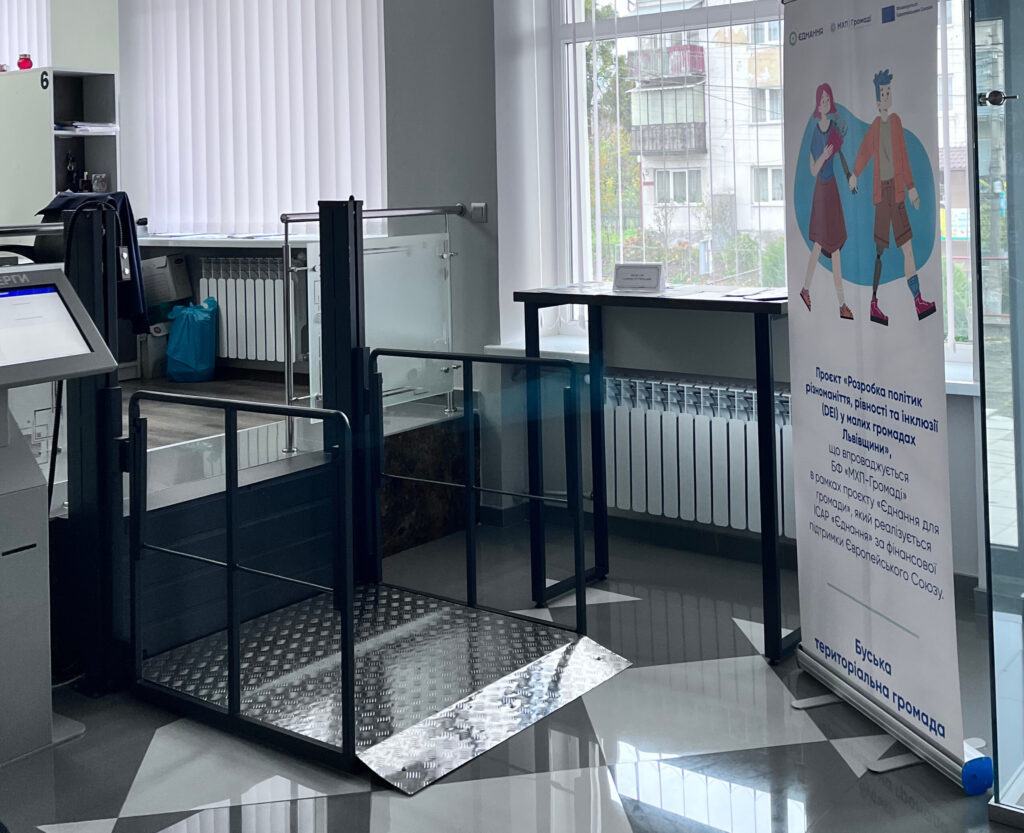
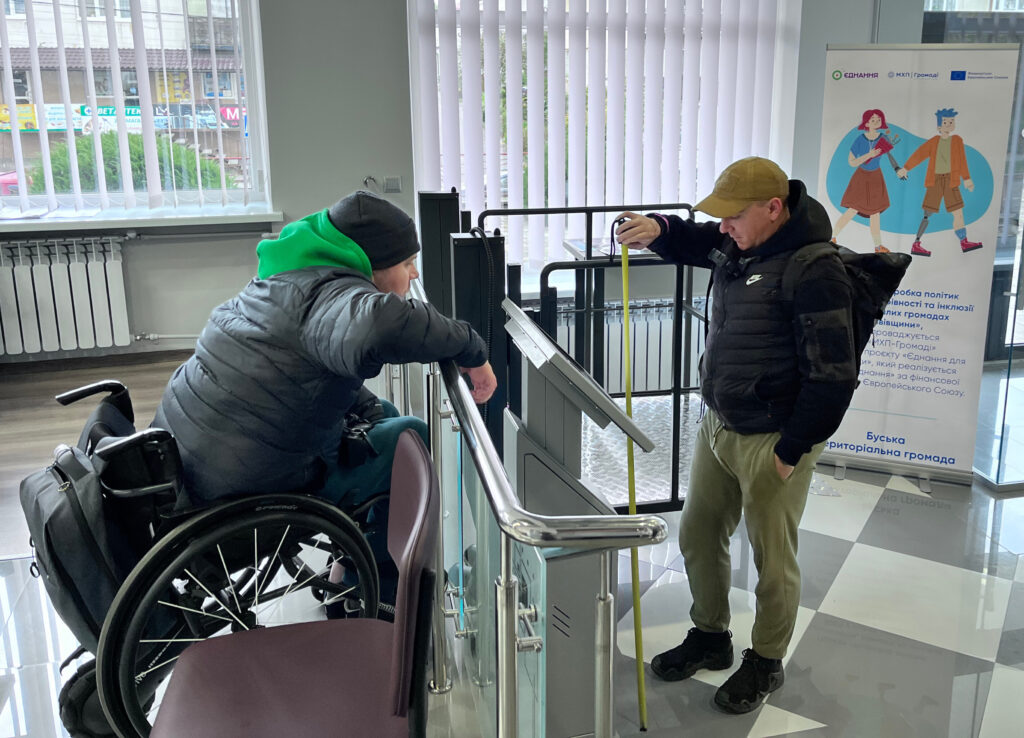
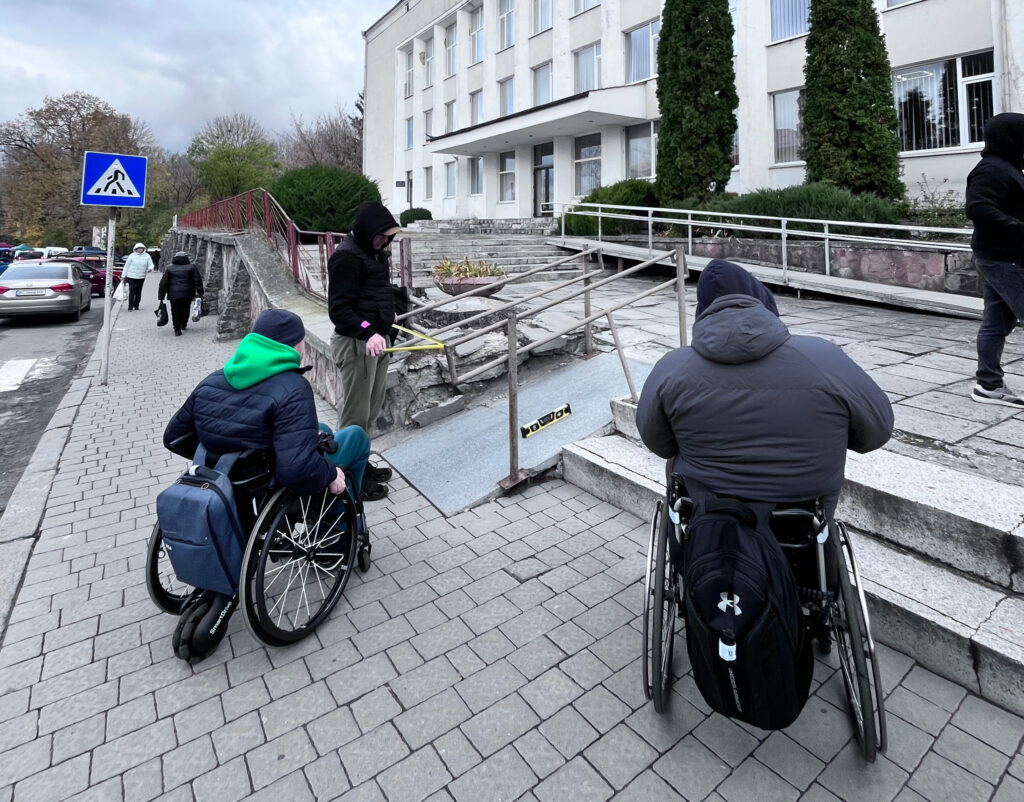
The audits covered six key facilities in the Zhovkva, Medenychi, Novoyavorivsk, Busk, Zolochiv, and Horodok communities. The working teams included representatives of local authorities, youth councils, and accessibility experts who jointly assessed the accessibility of administrative and social facilities.
During the fieldwork, participants documented barriers faced by different user groups, including people with disabilities, individuals with limited mobility, older adults, and parents with young children. On site, experts provided practical recommendations and demonstrated how accessibility can be improved without significant financial investment, based on the real needs of community residents.
“Accessibility is not about ramps or handrails. It is about human dignity and the ability of every person to live a full life in their community. We see the willingness of local authorities to listen to people with different needs and adapt public spaces accordingly. It is precisely these steps that shape a European quality of life at the local level,”
Following the audits, each community received a detailed report describing the current condition of facilities, identifying key barriers, and outlining clear, community-tailored recommendations. These comprehensive findings will serve as the foundation for the development and subsequent adoption of local DEI (Diversity, Equity, and Inclusion) policies.
“For many communities, this was the first practical step toward systemic inclusivity. We were not simply inspecting buildings — together with local teams, we explored how to make spaces more comfortable for every resident. What truly matters is that the initiative brought together young people and local authorities around a shared vision for change,”
The audits marked the second stage of the comprehensive initiative. Prior to this, participants took part in a two-day training in Lviv, where they were introduced to the principles of diversity, equity, inclusion, and accessibility, and began developing their own inclusive policy projects.
The project united young people and representatives of local self-government around a common goal — to make communities in the Lviv region more accessible, inclusive, and aligned with European standards, where barrier-free access is an integral component of high-quality public infrastructure.